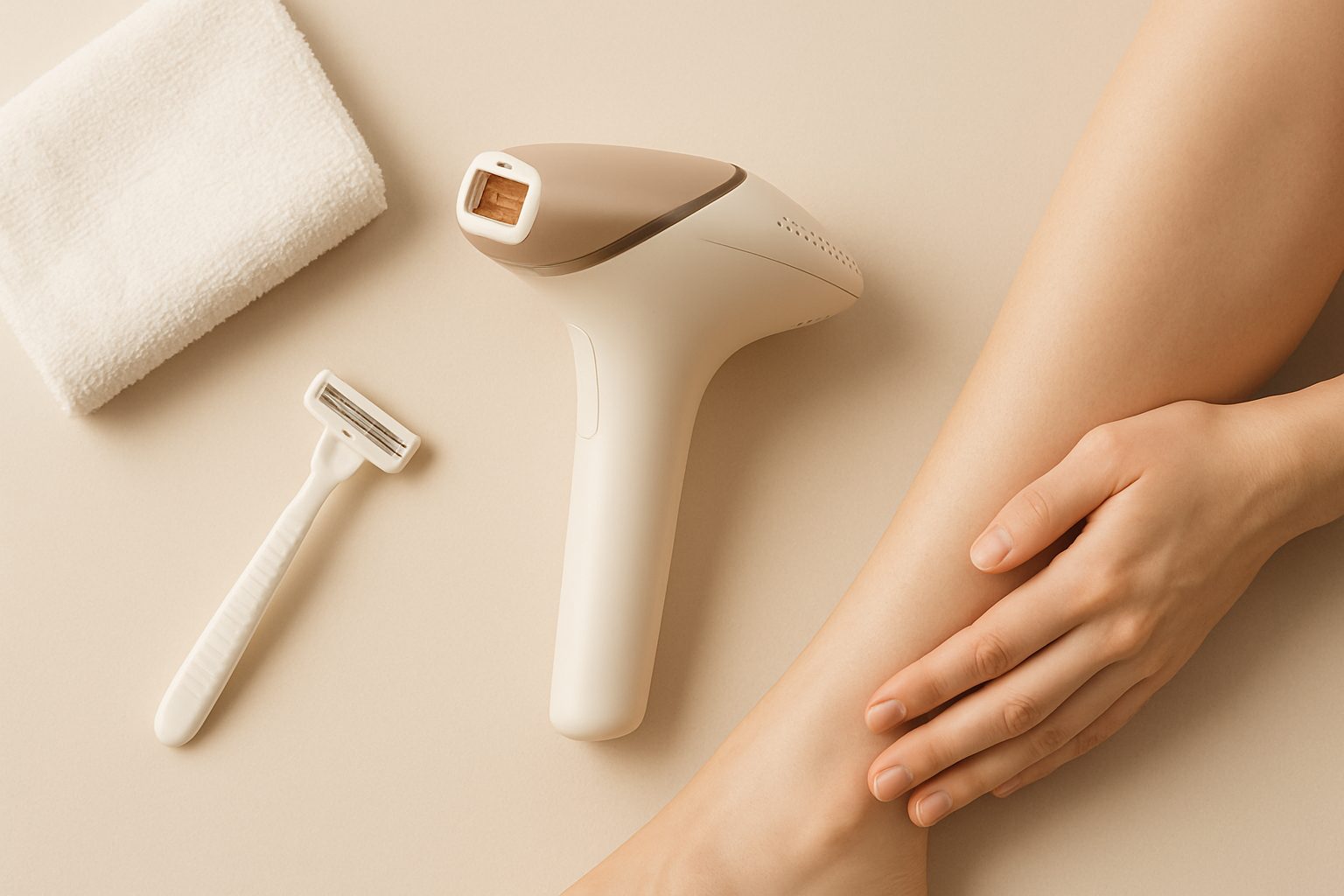
Are Home IPL Devices Safe for Sensitive Skin? UK Guide & Best Picks
Home IPL (intense pulsed light) devices have become increasingly popular in the UK for permanent hair reduction, but sensitive skin presents real challenges. The good news: IPL can work safely on sensitive skin with the right approach and device choice. The honest answer: it requires more caution than for most skin types.
What Makes IPL Risky for Sensitive Skin
IPL works by emitting broad-spectrum light that travels through the skin and is absorbed by melanin in hair follicles, generating heat that damages the follicle. Sensitive skin is typically characterised by a compromised skin barrier, reactive to irritants, prone to redness, and often rosacea-prone. When you add IPL heat to this, the risks increase.
The main concerns are:
- Excessive redness and prolonged inflammation
- Irritation that lasts days after treatment
- Hyperpigmentation (darkened patches) or hypopigmentation (lightened patches)
- Triggering or worsening rosacea or eczema flare-ups
- Burns, particularly on darker skin tones where melanin is higher throughout the skin, not just hair follicles
However, these risks aren't unavoidable—they're manageable with proper technique and device selection.
Patch Testing: Non-Negotiable First Step
Before treating large areas, patch testing is essential for sensitive skin. This isn't optional or a formality. A proper patch test involves:
Treating a small area (roughly 2cm square) on the intended zone—usually the underarm or inner thigh. Use the lowest energy setting available on your device. Wait 24 hours, then assess for redness, swelling, itching, or burning sensations.
Many people stop there, but extended monitoring matters for sensitive skin. Check again at 48 hours and 72 hours. Sensitive skin sometimes reacts delayed. If you see significant redness, swelling, or irritation that doesn't fade within 24 hours, IPL may not be suitable for you, or you'll need to start at even lower settings or longer intervals between sessions.
Skin Cooling: Your First Line of Defence
Skin cooling is crucial for safety and comfort on sensitive skin. There are two main approaches in home devices:
Contact cooling (sapphire window or gel pad) cools the skin directly during treatment. The Ulike Air3 uses advanced sapphire cooling, which maintains consistent temperature and reduces inflammation effectively. This is particularly valuable for sensitive skin because the cooling happens simultaneously with treatment, minimising heat accumulation.
Contact cooling is more reliable for sensitive skin because it's active during every pulse and provides immediate feedback—you can feel the cooling effect, which psychologically helps too.
Some devices use a pre-treatment cooling phase (ice packs or built-in cooling, then treatment), but this isn't as effective because the skin warms up again during the light pulses.
Low-Energy and Extended Interval Settings
The safest approach for sensitive skin is lower energy (fluence), delivered less frequently. Most quality devices offer adjustable energy levels. The Philips Lumea, widely available in the UK, provides several energy settings and is specifically designed with sensitive-skin users in mind, including a dedicated lower-energy mode.
Instead of treating the same area weekly at high energy, sensitive skin benefits from:
- Starting at energy level 1 or 2 (rather than jumping to 3 or 4)
- Extending the interval to every 2 weeks instead of weekly, even after the initial phase
- Gradually increasing energy only if your skin tolerates it well after 3–4 sessions
This slower approach still works—it just requires patience. Hair reduction takes 6–12 weeks rather than 4–8 weeks.
Skin Type and IPL Safety
IPL carries different risks for different skin tones. Darker skin tones have more melanin throughout the dermis, not just in hair follicles, which increases the risk of burns and hyperpigmentation. If you have dark skin and sensitive skin, this is a significant factor. You may need to start at considerably lower energy levels or consider seeking professional treatment with technicians trained in darker skin tones.
For fair and medium skin tones with sensitive skin, the risks are lower, but the approach remains cautious.
What to Avoid and When to Stop
Don't use IPL if you have:
- Active sunburn or sun-exposed skin (wait at least 2 weeks after sun exposure)
- Open wounds, eczema flare-ups, or dermatitis in the treatment area
- Taken retinoids in the past week (they increase photosensitivity)
- Certain medications that increase sensitivity (check with your GP if you're unsure)
If you experience blistering, severe swelling, or burns, stop immediately and allow the skin to heal fully before any further treatment.
Recommended Devices for Sensitive Skin
The Ulike Air3 is designed with sensitive skin in mind. The sapphire window stays consistently cool, the energy settings go quite low, and the device is quieter (less stress). It's pricier but reliability matters when you have reactive skin.
The Philips Lumea is well-established in the UK market and offers a dedicated lower-energy mode. It's widely available and has good customer support. The contact cooling is effective, though not quite as advanced as sapphire cooling.
Both have good track records with sensitive skin when used conservatively.
The Bottom Line
Home IPL can work safely for sensitive skin, but it demands restraint. Start low, patch test properly, allow extended recovery time between sessions, and monitor closely. If your skin reacts badly during the patch test phase, IPL may not be right for you—and that's okay. Professional treatments with experienced technicians, or alternative methods like dermaplaning or waxing, are valid alternatives.
The devices themselves aren't the whole story; your discipline with settings and intervals matters far more.
More options
- Philips Lumea IPL Hair Removal Series (Amazon UK)
- Braun Silk Expert Pro 5 IPL (Amazon UK)
- Ulike Sapphire Air3 IPL Device (Amazon UK)
- SmoothSkin Pure Fit IPL (Amazon UK)
- Remington iLight IPL Hair Removal (Amazon UK)