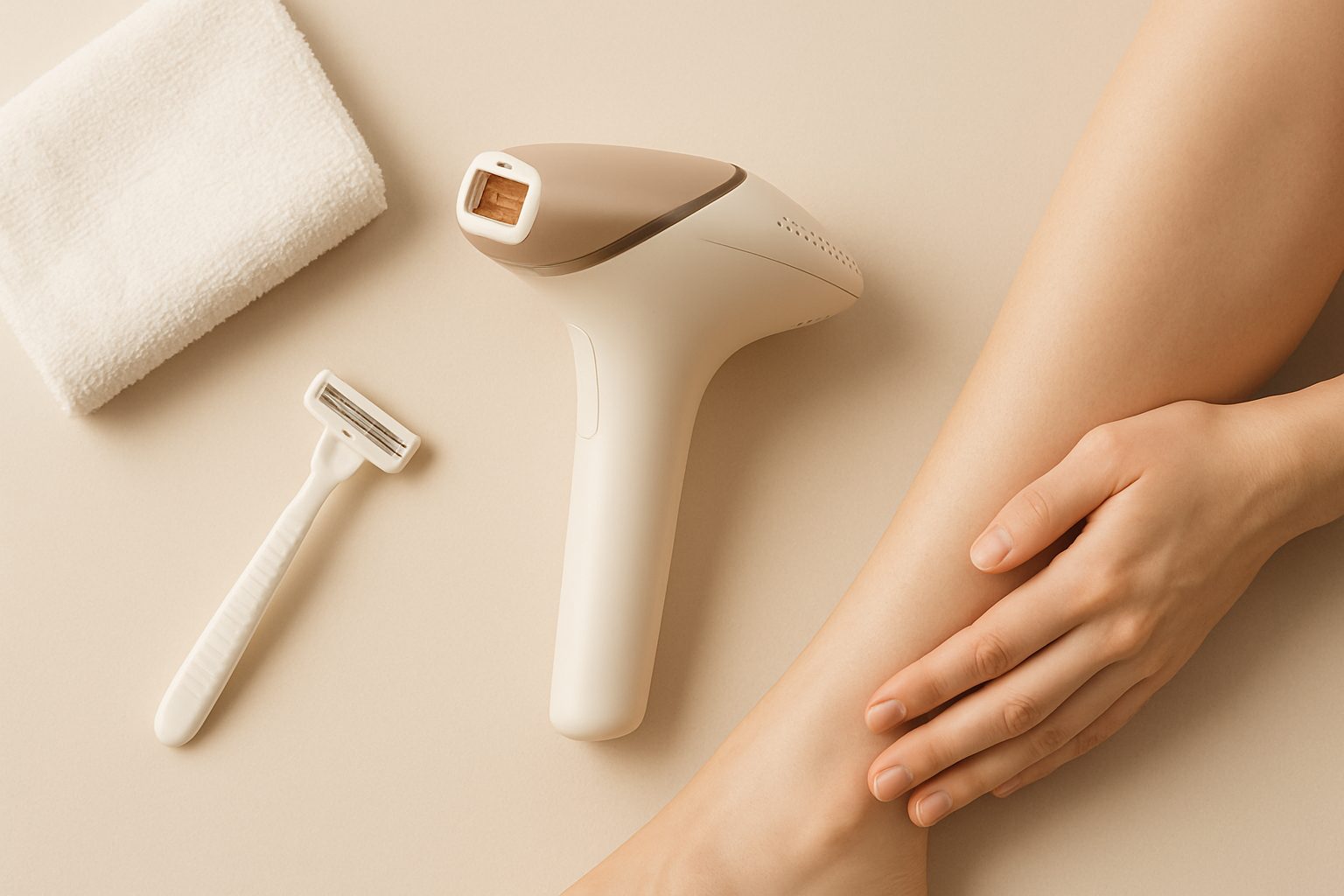
Best Cordless IPL Hair Removal Devices UK 2025 – Cut the Cable
Cordless IPL devices have become the practical choice for home hair removal. If you've spent years plugged into a wall socket, untangling cables, or worrying about cord length, a wireless model changes how you actually use the device. This guide covers what matters when choosing cordless: battery life per charge, flash count capacity, and whether the convenience justifies the trade-offs.
Why Cordless Matters (and When It Doesn't)
The appeal is straightforward. You can treat yourself in bed, in the garden, or whilst watching telly without hunting for a plug socket. Cordless devices are lighter than corded models, and you're not managing a power cable around wet bathroom surfaces.
The catch is battery capacity. Most rechargeable IPL devices hold enough charge for 300–600 flashes before needing a recharge. If you're treating your legs, underarms, and bikini line in one session, you might deplete the battery mid-treatment. That's not a deal-breaker—you'll simply charge and continue—but it's worth knowing upfront if you have extensive areas to cover.
Cordless models also cost more than their corded equivalents, typically £200–500 compared to £150–350 for comparable wired devices. You're paying for portability and the engineering that packs the battery inside.
Flash Count Per Charge: What's Realistic
Flash count is the number of light pulses your device delivers on a single charge. This varies wildly by model and, crucially, by intensity level.
At maximum intensity, most devices deliver 300–400 flashes. At lower intensities—which work fine for maintenance after your initial course of treatments—you might stretch this to 600 flashes or more. Manufacturers sometimes advertise the higher figure, so check the spec sheet for what you actually get at the intensity level you'll use.
A typical session treating legs, underarms, bikini line, and face requires roughly 200–300 flashes depending on hair density and device head size. Most cordless devices handle a full-body session without running dry, though you're left with little reserve.
If you plan to treat a partner as well, or you're dealing with very dense hair, a longer battery life becomes valuable. This is where device choice makes a real practical difference.
Ulike Air3: Battery-Efficient Design
The Ulike Air3 is one of the few cordless IPL devices gaining genuine UK market presence. It's positioned as premium, priced around £400–450.
The standout feature is battery efficiency. Ulike claims 600 flashes per charge at low-to-mid intensity, which aligns with what users report for partial-body maintenance sessions. The battery recharges fully in roughly 90 minutes via USB-C.
The device itself is compact and genuinely lightweight (around 200g), making it comfortable to hold during longer sessions. The flash head is smaller than some alternatives—roughly the size of a two-pence piece—which means more flashes needed to cover large areas but also better precision for the face and smaller zones.
Honest downsides: at maximum intensity, the flash count drops to around 300, so if you're in the early heavy-duty treatment phase or you have dark, coarse hair, you'll charge more frequently. The smaller head also means longer session times overall.
Philips Lumea Prestige Wireless: Tried-and-Tested
Philips has been in the IPL game longer than most. The Lumea Prestige comes in a cordless model that's been available for several years, which means there's genuine user feedback and documented reliability.
Battery life sits around 400 flashes at medium-high intensity, dropping to 250–300 at full power. It takes 2–3 hours to recharge fully. The device is heavier than the Ulike (around 500g), but the larger flash head—roughly the size of a £1 coin—covers ground faster, offsetting the extra weight somewhat.
Philips devices are generally robust. The cordless Lumea Prestige has a solid warranty (two years standard), and spare parts are easy to find in the UK. This matters if something breaks. The downside: Philips models cost £350–450, and you're paying partly for the brand reputation rather than cutting-edge battery tech.
Battery Life and Charging Practicalities
All cordless IPL devices lose charge capacity over time. After 18–24 months of regular use, expect the battery to deliver roughly 80% of its original flash count. This is normal for rechargeable lithium cells.
Fast charging (under 2 hours) is available on some models but not all. If you're a frequent user, that 90-minute recharge on the Ulike saves more time annually than it sounds.
USB-C charging is becoming standard, which is convenient—you can use the same cable as your phone or laptop. Some older models use proprietary chargers, which is a minor hassle.
Treatment Sessions: Plan Around Battery Life
If you're starting treatment and need to cover large areas densely, you'll benefit from a cordless device with higher flash capacity or faster recharge. Ulike Air3 and Philips Lumea Prestige both handle this, though the Ulike's smaller head means more flashes needed per session.
Once you're in maintenance mode (treating regrowth every 4–8 weeks), cordless becomes genuinely convenient. A single charge covers a quick touch-up without thinking about plugs.
The Honest Take
Cordless IPL works well for ongoing maintenance and lighter treatment schedules. The Ulike Air3 and Philips Lumea Prestige are the devices with the most reliable user data in the UK market right now. Ulike prioritises battery efficiency and portability; Philips offers reliability and a wider head for faster coverage.
Neither is wrong. Choose based on whether you prioritise charging speed and portability (Ulike) or trusted brand longevity and faster session times (Philips). Both will handle cordless home IPL effectively—just accept that you'll charge more frequently than with a plug-in device, and plan your sessions accordingly.
More options
- Philips Lumea IPL Hair Removal Series (Amazon UK)
- Braun Silk Expert Pro 5 IPL (Amazon UK)
- Ulike Sapphire Air3 IPL Device (Amazon UK)
- SmoothSkin Pure Fit IPL (Amazon UK)
- Remington iLight IPL Hair Removal (Amazon UK)